Haves and have-nots quote
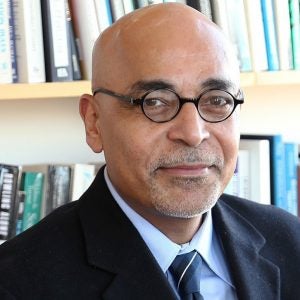
K. "Vish" Viswanath, PhD

Dr. Viswanath is an Associate Professor in the Department of Society, Human Development, and Health at the Harvard School of Public Health (HSPH), a faculty member in the Center for Community-Based Research (CCBR) at the Dana-Farber Cancer Institute (DFCI), and director of the Health Communication Core of the Dana-Farber/Harvard Cancer Center (DF/HCC). He also chairs the Steering Committee for the Health Communication Concentration at HSPH and teaches health communication courses within this concentration.


Research Focus
Dr. Viswanath's research draws on literature in communication science, social epidemiology, and social and health behavior. He is, however, equally concerned with bridging the gap between "discovery" and "delivery" and is working toward translating knowledge to influence public health policy and practice. Dr. Viswanath's current research program reflects his general interests, but in three distinct concentrations:

  1. the reasons for limited access to health information and the implications of unequal access to public and individual health
  2. the study of health and science reporting, including the sociology of medical and health journalism, with an interest in bridging the worlds of science and journalism to improve health communication
  3. examining the effects of mass media — news and entertainment — on health knowledge, attitudes, and behaviors

The findings from this body of work are useful in designing:

  • strategies not only to enhance access to health information among the underserved, but also to make this information understandable to low-literacy populations.
  • effective messages and communication systems to reduce cancer risk and promote prevention.
Research at the Viswanath Lab
Current research in the Viswanath Lab at DFCI/HSPH focuses on documenting the link between inequalities in communication and health disparities, and how to address these disparities through communication and dissemination. Within this broader context, Dr. Viswanath's work explores:
  • e-health and health disparities
  • information seeking among cancer survivors and patients
  • the professional work of health journalists
  • how people learn about health from the media
  • the media's role in tobacco use
  • health communication and social capital

The Viswanath Lab currently consists of post-doctoral fellows, doctoral students, and project staff. The work is funded by the National Institutes of Health, the American Legacy Foundation, the Centers for Disease Control and Prevention, and the Lance Armstrong Foundation, among others.

ECHO Lab
The recently completed ECHO (Enhancing Communications for Health Outcomes) Laboratory was created in part to address the crucial gap between research and practice. This state-of-the-art facility is ideal for formative research and is equipped with amenities to conduct focus groups, experiments, and usability studies. The ECHO Lab is a resource for researchers to better observe and understand how their target audience reacts to a variety of message formats in different media, ranging from print materials to interactive technologies. At a time when more health information is available than ever, a resource such as the ECHO lab is one viable tool to evaluate which health communication materials are the most effective and user-friendly.

Boards, Associations, and Awards
Dr. Viswanath is the recipient of the Mayhew Derryberry Award from the American Public Health Association (APHA) for his contribution to health education research and theory (2009). He was elected Fellow of the Society for Behavioral Medicine (2008) and the Midwest Association for Public Opinion Research (2006). He is also chair of the Board of Scientific Counselors for the National Center for Health Marketing at the Centers for Disease Control and Prevention. He was appointed to this post by US Department of Health and Human Services Secretary Michael Levitt.

Background
Before coming to Harvard, Dr. Viswanath was the Acting Associate Director of the Behavioral Research Program, Division of Cancer Control and Populations Sciences at the National Cancer Institute. As Acting AD of BRP, Dr. Viswanath was responsible for 50 scientific and administrative staff and for extramural scientific developments in behavioral sciences at NCI. He was also a senior scientist in NCI’s Health Communication and Informatics Research Branch. He went to the National Cancer Institute from The Ohio State University where he was a tenured faculty member in the School of Journalism and Communication with an adjunct appointment in the School of Public Health. Dr. Viswanath was also a Center Scholar with Ohio State's Center for Health Outcomes, Policy, and Evaluation Studies.

Dr. Viswanath received his doctoral degree in Mass Communication from the University of Minnesota.

Professional Organizations
Dr. Viswanath is active in numerous professional organizations. He was the Chair of the Mass Communication Division of the International Communication Association and is a member and past President of the Midwest Association for Public Opinion Research. He was the Head of the Theory and Methodology Division of the Association for Education in Journalism and Mass Communication. He is also a member of American Society for Preventive Oncology, the American Public Health Association, and the Society for Behavioral Medicine.

Publications
Dr. Viswanath has published extensively on a range of topics spanning health communication, social epidemiology, and social and health behavior in both health and communication journals. He is the co-editor of three books: Mass Media, Social Control and Social Change (1999), Health Behavior and Health Education: Theory, Research, and Practice (2008), and the National Cancer Institute’s Tobacco Monograph: The Role of Media in Promoting and Reducing Tobacco Use (2008). In addition, Dr. Viswanath is the Social and Behavioral Research editor for The International Encyclopedia of Communication (2008), a 12-volume project published by Blackwell Publishing under the General Editorship of Dr. Wolfgang Donsbach.